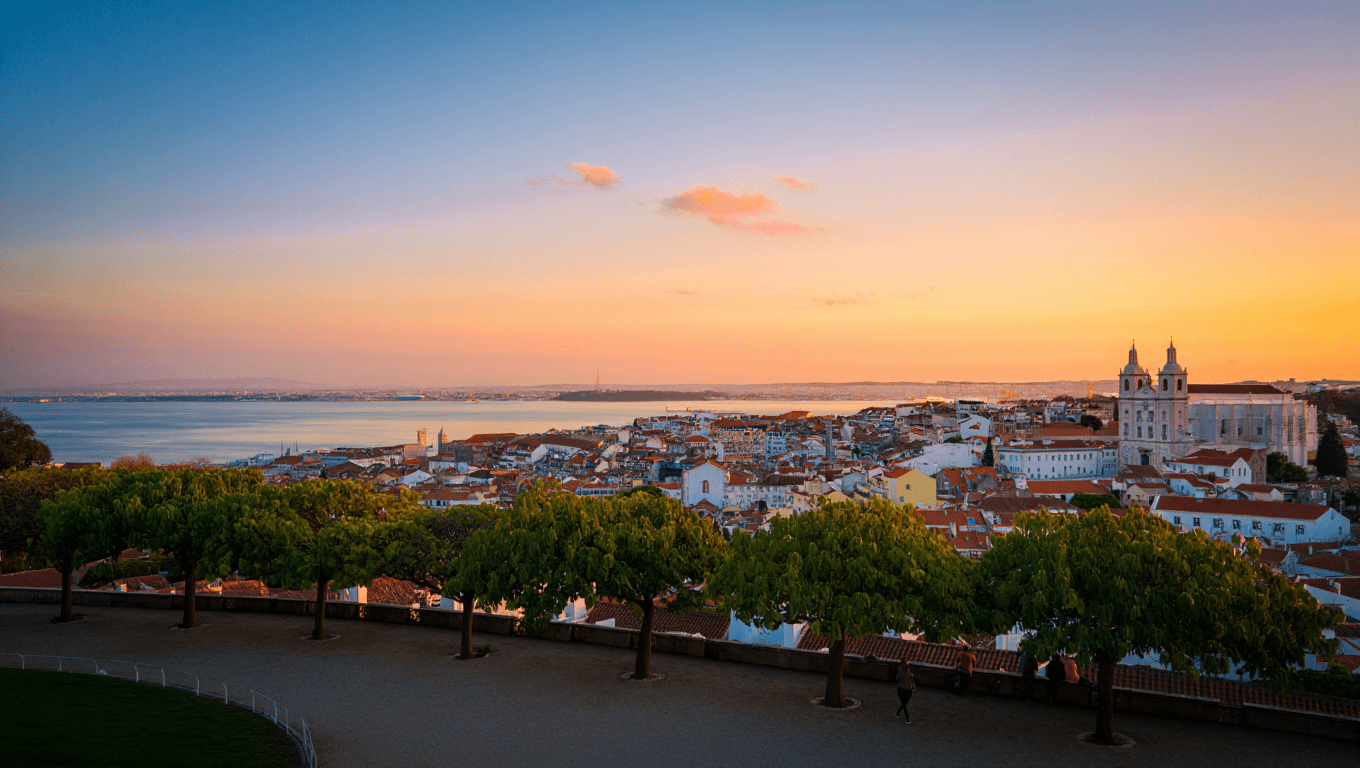
Best Viewpoints in Lisbon for Light, Hills, and River Views
A practical guide to Lisbon viewpoints, with advice on light direction, steep streets, river views, crowd levels, and logical walking routes.
A practical guide to Lisbon viewpoints, with advice on light direction, steep streets, river views, crowd levels, and logical walking routes.
Lisbon is built for viewpoint travel. The city rises and falls across hills, so many everyday streets suddenly open into broad views of tiled roofs, church towers, the Tagus River, and the 25 de Abril Bridge. Late May is a good season for this guide because the days are long, but the peak summer heat has not fully taken over. For a visual travel blog, Lisbon is one of the clearest examples of how topography shapes a city route.
The first viewpoint to include is Miradouro da Senhora do Monte. Visit Lisboa describes it as a calm spot with an incredible view over the city. It is higher than many central viewpoints, which makes it useful for orientation. You can see the castle area, Baixa, the river, and the western side of Lisbon in one sweep. For background, see Visit Lisboa’s guide.
Start early if you want cleaner photos. Senhora do Monte is popular, and sunset can become crowded. In the morning, the viewpoint feels more practical for planning because you can identify the shape of the city before walking down through Graça and Alfama. This is also where a map-based article can help readers. Marking this as the high starting point makes the rest of the route easier.
Miradouro da Graça is close enough to pair with Senhora do Monte, but it has a different mood. It feels more like a neighborhood terrace, with a broad view and space to pause. For photography, use it for layered city images: foreground trees or railings, mid-ground rooftops, and the river in the back. This is a good reminder that a viewpoint does not need to be empty to be useful. People sitting, walking, and resting can make the scene more natural.
Miradouro de Santa Luzia and Miradouro das Portas do Sol are better for Alfama and river views. These stops are lower and more detailed. Instead of one huge panorama, you get tiled walls, terraces, narrow streets, and the Tagus beyond the rooftops. They work well in a walking guide because they connect viewpoints with the older texture of the city. This makes the article stronger than a simple ranking.
For sunset, Miradouro de Santa Catarina is a useful option. It faces west and has a wider social feel. Readers should know that sunset viewpoints in Lisbon can be busy, so it is better to arrive early, stay patient, and avoid blocking walkways with tripods or bags. A friendly guide should encourage good travel behavior, especially in places where daily local life and visitor photography overlap.
Another strong stop is Castelo de São Jorge. It is not only a monument; it also gives a high view over central Lisbon. This angle helps connect the hilltop viewpoints with the grid of Baixa below. If readers want one paid viewpoint and several free miradouros, the castle can be the main structured stop while the terraces provide the softer walking experience.
Lisbon also pairs naturally with earlier city-view articles such as Prague panoramic views. Prague is organized by river bridges and towers. Lisbon is organized by hills and terraces. Comparing those two routes helps readers understand why PanoramaExplorer focuses on how a place is seen, not only where the famous landmarks are.
A good Lisbon viewpoint day should not be rushed. Start high at Senhora do Monte, move through Graça, continue to Alfama’s terraces, use the castle for a structured overview, and save Santa Catarina for evening light. Lisbon’s views are not isolated stops. They are part of the city’s daily movement, and that is what makes them worth planning carefully.