Lake Como Viewpoints Without a Car
A car-free Lake Como guide using trains, ferries, village paths, and short climbs to reach rewarding lake and mountain viewpoints.
A car-free Lake Como guide using trains, ferries, village paths, and short climbs to reach rewarding lake and mountain viewpoints.
Lake Como is often presented as a driving destination, but a car can create as many problems as it solves. Narrow roads, limited parking, summer traffic, and slow movement between villages make public transport a strong option for travelers who care about views rather than mileage. Trains, ferries, funiculars, and short uphill walks can connect several of the lake’s most useful viewpoints in one trip.
The central lake is the easiest area to explore without a car because Bellagio, Varenna, Menaggio, and Cadenabbia are linked by boat. The official Lake Como ferry timetable changes by season, and services can be delayed or suspended by strong wind. Check the current schedule before building a day around a final connection. Save a copy of the timetable offline and leave a margin before the last ferry.
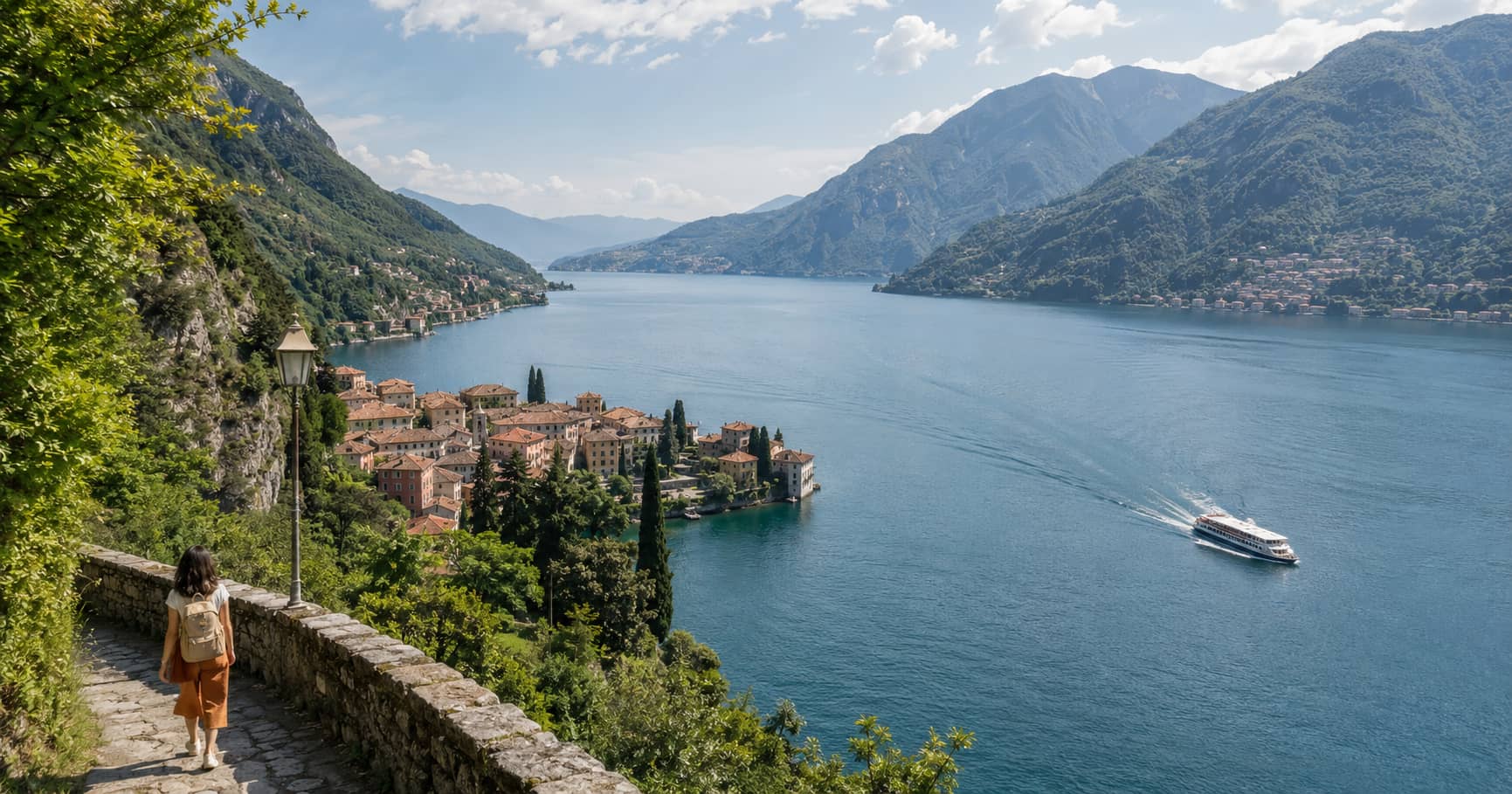
A common mistake is to treat every crossing as wasted travel time. On Lake Como, the ferry is itself one of the best viewpoints. From the water, you can see how villages sit on steep slopes, how villas relate to their gardens, and how the three branches of the lake meet. Stand where you can move without blocking doors or crew areas, and protect your camera from spray.
Varenna is a practical starting point because it has a railway station on the eastern shore and a ferry connection to the central lake. The waterfront promenade gives easy views across the water, while the narrow lanes above the harbor add foreground detail. Early morning is useful before day-trip crowds concentrate around the ferry landing.
The higher option is Vezio Castle, located above Varenna. Varenna’s tourism site describes a 360-degree lake view from the castle tower. The climb is steep enough to require proper shoes and time, especially in warm weather. It should not be described as a casual flat stroll. Check the official Varenna information before going because opening can depend on season and weather.
If haze hides the opposite shore, rain has made stone paths slippery, or you have limited time before a ferry, stay near the waterfront. A lower view with clear layers is better than a high view with no visibility. The harbor, lakeside path, and streets around San Giorgio provide enough visual range for a shorter visit.
Bellagio sits where the lake divides into its Como and Lecco branches. Punta Spartivento, at the northern edge of the village, is the most logical public viewpoint because it shows open water in several directions. It is not a high panorama, but it explains the shape of the lake more clearly than many elevated terraces.
Walk there through the village rather than rushing directly from the ferry. The steep lanes, stone steps, framed lake openings, and changing roof lines are part of the visual route. Bellagio becomes crowded around the central waterfront, so move a few streets uphill when the promenade feels congested. Photographing people moving through the lanes often communicates the place better than waiting for an impossible empty scene.
Menaggio provides a broad view back toward Bellagio and the mountains behind Varenna. Its lakeside promenade is flatter and more spacious than many village routes, making it suitable for travelers with limited mobility or heavy camera equipment. The value here is not a single famous platform. It is the ability to walk slowly along the shore and watch the background change.
Late afternoon can be effective because side light separates the mountain ridges. However, exposure depends on the time of year and cloud cover, so avoid promising a fixed sunset composition. Use benches, trees, railings, and boats as foreground elements, and keep access clear for residents.
Trying to combine Como city, Brunate, Varenna, and Bellagio in one day usually creates too much transport. Como and Brunate work better as their own route. From Como, the funicular climbs toward Brunate, where streets and walking paths reveal views over the southern lake and city. The higher Volta Lighthouse involves additional walking and should be treated as a separate effort, not a quick extension.
This is a different visual experience from the central lake. Varenna and Bellagio show steep villages and the meeting of lake branches. Brunate shows the urban edge of Como, the southern basin, and distant mountains. Keeping them on separate days gives each area enough time and reduces the risk of missing a final boat or train.
Take an early train to Varenna, photograph the waterfront, and climb to Vezio only if conditions and timing are good. Return for a ferry to Bellagio, walk to Punta Spartivento, and then cross to Menaggio for a slower promenade before returning by boat. This plan is flexible because each stop can be shortened without breaking the entire day.
Do not schedule every ferry with only a few minutes between connections. Queues, weather, and boarding procedures can change the real travel time. Carry water, sun protection, and a light layer because conditions on open decks differ from village streets. Keep one backup route that ends at a railway station.
A car-free Lake Como trip works because public transport forces you to see the lake at its natural pace. The ferry creates moving compositions, the train removes parking pressure, and short climbs add height only where it improves the route. That approach is more useful than chasing villas and villages as isolated checklist items.
Start with the transport network, choose one demanding climb, and treat the boats as viewpoints rather than transfers. Lake Como becomes easier to understand when you see its shores from the water and allow the shape of the lake to guide the day.