Santorini Viewpoints That Are Worth the Crowds
A realistic guide to Santorini viewpoints, comparing famous sunset locations, quieter alternatives, crowd pressure, access, and the best visiting times.
A realistic guide to Santorini viewpoints, comparing famous sunset locations, quieter alternatives, crowd pressure, access, and the best visiting times.
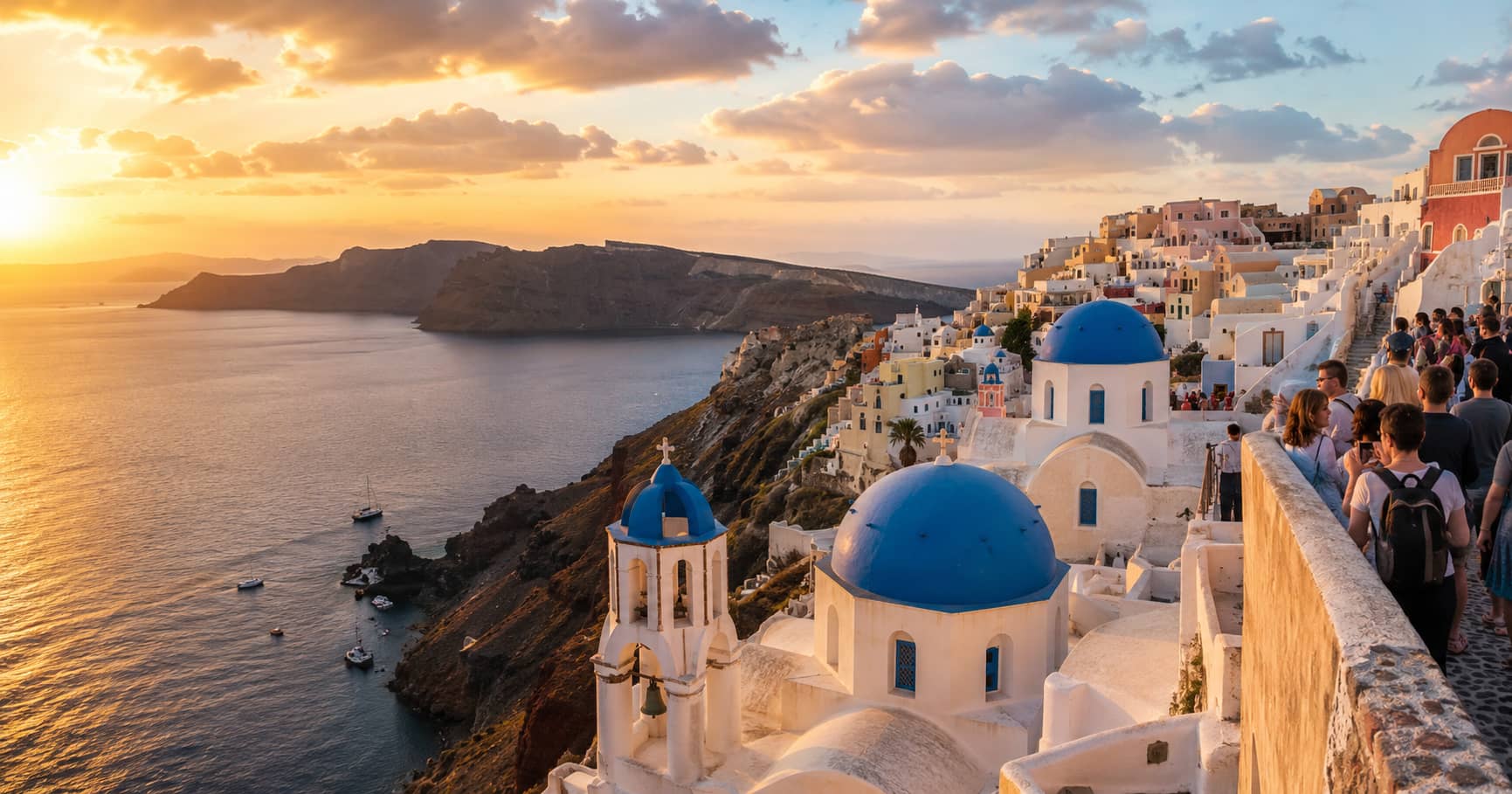
Santorini’s caldera creates one of Europe’s most recognizable coastal views, but popularity changes how you should plan the island. Oia at sunset can be visually strong and operationally difficult at the same time. Narrow lanes fill quickly, buses face delays, and many visitors compete for the same small spaces. A useful viewpoint guide should separate locations that genuinely add a new perspective from stops that repeat the same scene.
The western side of Santorini overlooks a flooded volcanic caldera, with settlements built along high cliffs. The strongest viewpoints show more than white buildings and blue domes. They explain the depth of the cliffs, the curve of the island, the position of volcanic islets, and the relationship between villages. A close architectural detail and a wide caldera panorama serve different purposes, so plan for both.
Oia remains important because its lanes, cave houses, churches, and cliff-edge architecture create dense visual layers. Sunset crowd pressure and slow traffic make timing important in summer. That is a reason to change your timing, not automatically skip the village. Greece’s national tourism site provides broader island context in its official Santorini overview.
Arrive in the morning for cleaner lanes and clearer architectural photographs. Walk slowly toward the western end, but avoid treating private terraces and hotel roofs as public viewpoints. Respect barriers and access signs. Many of the most photographed spaces are homes or accommodation entrances, and blocking them for a picture creates unnecessary conflict.
Stay only if the experience matters enough to accept the crowd. Arrive well before sunset, choose a safe public position, and do not expect to move freely at the final moment. A better photographic strategy is often to capture Oia in late light before the sun reaches the horizon, then leave before transport demand peaks. The strongest image may be warm light on the village rather than the sun itself.
Imerovigli sits at one of the highest points along the caldera rim and is often called the island’s balcony. The village lies along the caldera route between Fira and Oia and offers broad views over the sea and volcanic islets. It is usually easier to read the full caldera here than from the tighter lanes of Oia.
Skaros Rock becomes a natural focal point in the foreground. The walk toward it involves exposed paths, steps, and little shade, so it should not be reduced to a quick photo stop in midday heat. You do not need to reach the furthest point for a useful view. Several public positions around Imerovigli show the rock, caldera, and settlement in one frame.
Firostefani is less dramatic than Imerovigli, but it helps build a continuous walking route. The cliff path between Fira, Firostefani, and Imerovigli changes gradually, revealing churches, terraces, cruise ships, and caldera walls from different heights. The official description of Fira notes that the pedestrian caldera route continues through Firostefani and Imerovigli toward Oia.
This section is valuable in the morning or late afternoon when the path is more comfortable. Use the route to create a sequence rather than trying to identify one perfect platform. Wide views, architectural details, and people moving along the ridge tell a fuller story than twenty versions of the same sunset.
Fira is the island’s busy capital, and that activity can improve photographs when handled deliberately. From the caldera edge, ferries, cable cars, cruise tenders, and cliff paths show how visitors move through steep terrain. The view is not as calm as Imerovigli, but it explains the practical side of Santorini.
Visit outside the busiest middle hours if you want space. In strong summer light, use shaded lanes and framed openings rather than forcing a flat wide panorama. Evening can produce good depth across the caldera, but the center remains active long after sunset.
Not every strong Santorini view faces the classic cliff villages. The southern part of the island offers lower coastal viewpoints, volcanic colors, and broader space. Akrotiri Lighthouse is often included in sunset routes, but parking and roadside behavior require care. Do not stop where the road narrows, and avoid climbing unstable ground for a marginally higher angle.
A southern stop works best when paired with nearby coastal settings rather than treated as a substitute for Oia. It gives the article visual variety and shows that the island’s value is not limited to whitewashed architecture.
A balanced day might begin in Oia early, move to Fira for lunch and shade, then walk through Firostefani toward Imerovigli in late afternoon. This keeps Oia’s most crowded period out of the plan and saves the broadest caldera view for softer light. Another option is to stay near one village and avoid crossing the island at sunset, when roads and buses are under pressure.
Check current transport and access information through local operators, carry water, and protect yourself from sun and wind. Cliff-edge paths can feel cooler than inland streets, but they offer little shade.
Oia is worth the crowds when you visit for its architecture and arrive at a sensible time. Imerovigli is worth the climb because it explains the caldera. Firostefani is worth walking because it connects the caldera route, while Fira adds movement and scale. The southern coast adds variety.
The poor plan is to chase every sunset platform and repeat the same west-facing photograph. The better plan selects one famous stop, one high overview, one walking section, and one quieter alternative. Santorini is easier to appreciate when you stop trying to remove all people from a place shaped by intense visitor demand.