Amalfi Coast Scenic Viewpoints for a Summer Route
A summer route through the Amalfi Coast focused on coastal viewpoints, road access, village stops, changing light, and practical timing.
A summer route through the Amalfi Coast focused on coastal viewpoints, road access, village stops, changing light, and practical timing.
The Amalfi Coast is not an easy place to treat casually in summer. Roads are narrow, traffic can be slow, and the most famous towns fill quickly. Still, it remains one of Europe’s strongest scenic routes because the views are tied to cliffs, villages, sea, terraces, and old paths. A useful guide should be honest: the best Amalfi Coast viewpoints require planning, early starts, and patience.
UNESCO describes the Costiera Amalfitana as an outstanding cultural area with exceptional scenic values shaped by dramatic topography and long historical development. That is the core reason the route works visually. The coast is far more complex than a line of beaches. It is a built environment sitting on steep terrain above the sea. For authority and context, see UNESCO’s Amalfi Coast page.
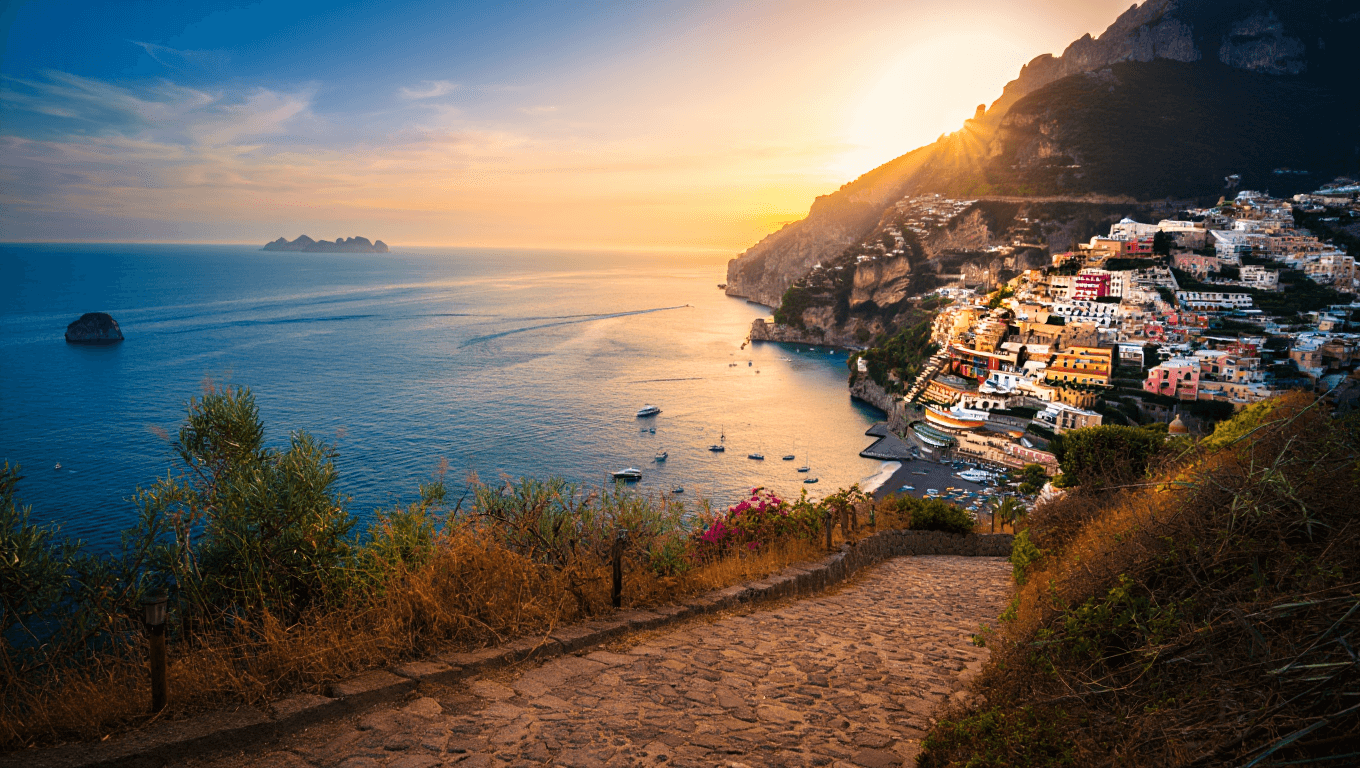
Begin with Positano, but do not build the whole article around the same postcard angle. The classic view from the road above town is useful because it shows the stacked houses, dome, beach, and vertical slope in one frame. Early morning is best if you want a calmer scene. In summer, midday light can be harsh, and traffic stops are often limited, so never block the road for a photo.
Ravello gives a different kind of view. It sits above the coast and feels less compressed than Positano. Villa Rufolo and Villa Cimbrone are often associated with some of the area’s most famous garden views, but the practical point for readers is simple: Ravello is where the coast opens from above. It is a good stop for people who want panoramic sea views without standing beside a busy road.
The Path of the Gods is the key walking route for stronger scenery-focused images. It connects high villages and open views above the coast, with sections that can feel exposed. In summer, this walk should start early because heat and sun can become a real issue. Readers should bring water, wear proper shoes, and check route conditions locally. A scenic guide should not make a walking route sound easier than it is.
Amalfi town itself works better as a street and harbor stop than a high viewpoint. The cathedral steps, harbor edge, and narrow streets give variety after cliff views. This is useful for a complete visual story. If every image is shot from above, the route can feel repetitive. Ground-level scenes show scale, crowds, boats, and the relationship between daily movement and the coast.
For a less rushed road-trip article, include smaller stops such as Praiano and the area around Furore. Praiano is often useful for sunset because of its position along the coast. Furore’s fjord-like inlet gives a tighter scene with bridge, water, and rock walls. These places help reduce the pressure on the most famous viewpoints and make the article more helpful for readers who want a route, not a checklist.
Readers who followed earlier European viewpoint guides such as Lisbon viewpoints will recognize a similar lesson here. Terrain shapes the route. In Lisbon, hills create terraces. On the Amalfi Coast, cliffs create road bends, stairways, gardens, and high paths. The best images come from respecting that structure.
The best summer plan is to choose fewer stops and do them well: Positano early, Ravello for a high view, one walking section if conditions allow, Amalfi for ground-level context, and one smaller village for a calmer finish. The Amalfi Coast rewards slow planning. Trying to photograph everything in one day usually weakens the experience and the images.